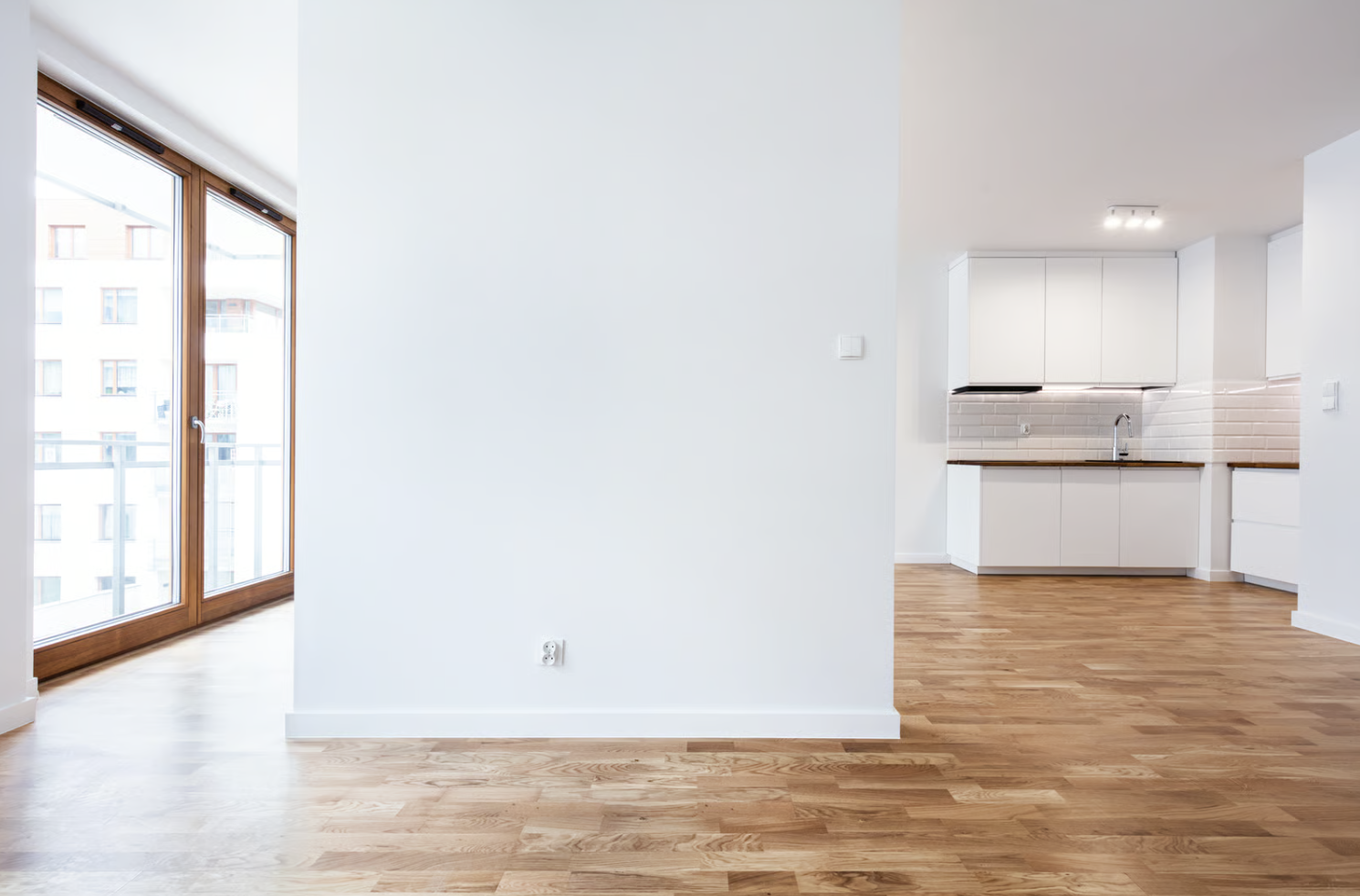
After-repair value, commonly abbreviated as ARV, is one of the most important estimates in a fix-and-flip investment. It represents the anticipated market value of a property after the planned repairs and renovations have been completed.
Investors use ARV to evaluate an acquisition, develop a renovation budget, estimate potential profit, and determine whether the project supports the proposed financing.
ARV is not guaranteed, however. It is an informed estimate based on comparable sales, the proposed scope of work, property characteristics, and expected market conditions when the renovation is complete.
ARV stands for after-repair value. It is the estimated value of a property in its fully renovated condition.
ARV is not:
For example, purchasing a property for $150,000 and spending $30,000 on renovations does not automatically result in an ARV of $180,000. The completed property could be worth more or less than that amount depending on comparable sales, location, design, workmanship, market conditions, and buyer demand.
ARV affects several parts of a fix-and-flip strategy.
An investor can work backward from the estimated ARV to determine how much the property may support as an acquisition.
The analysis should account for:
A property with a high ARV can still be a poor investment if its acquisition, renovation, financing, and holding costs are too high.
The ARV analysis helps an investor determine which improvements are supported by the surrounding market.
A renovation should generally bring the property to a condition and finish level consistent with the comparable homes supporting the valuation. Over-improving beyond neighborhood expectations may increase costs without producing an equivalent increase in value.
A simplified projected-profit calculation is:
Projected profit = ARV − Acquisition cost − Renovation cost − Financing, holding, and selling costs
This figure remains an estimate. Changes in the renovation budget, schedule, market, appraisal, or ultimate sale price can materially affect the result.
Fix-and-flip lenders may consider ARV when determining the maximum loan amount and evaluating the project.
The lender may also consider:
A strong projected ARV does not replace borrower or project underwriting.
Before selecting comparable sales, clearly define what the property will be when the renovation is finished.
Consider:
ARV should reflect the property after the planned scope is complete—not an upgraded version that is outside the actual budget.
Comparable sales, or “comps,” are recently sold properties that resemble the subject property in its proposed renovated condition.
Useful comps generally share similar characteristics, including:
The closest property is not always the best comp. A nearby distressed sale may be less relevant than a slightly more distant renovated home that closely matches the completed project.
Active and pending listings can provide information about current competition, but their asking prices do not prove what buyers will ultimately pay.
Closed sales generally provide stronger evidence of market value. Investors should still review current listings to understand how much competing inventory may be available when the flip is ready for sale.
No two properties are identical. Differences in size, condition, layout, location, lot, parking, and amenities may require adjustments.
Investors should avoid applying arbitrary dollar amounts without market support. A licensed appraiser or experienced local real estate professional can provide additional insight when the property or market is difficult to evaluate.
A comp that supports the ARV today does not guarantee the same value when the renovation is complete.
Consider how long the project may take and whether market conditions could change during:
A conservative ARV can provide a larger margin for changes in pricing or demand.
Assume an investor is evaluating a property with the following projections:
The projected profit would be:
$250,000 − $150,000 − $30,000 − $15,000 − $18,000 = $37,000
This estimate does not account for every possible expense or tax consequence. If the renovation costs $10,000 more than expected or the property sells for $10,000 less than the estimated ARV, the projected profit would decline by $20,000 before considering any additional carrying costs.
The example demonstrates why ARV should be treated as one part of the analysis rather than as a guaranteed outcome.
Renovation cost measures what the investor expects to spend. ARV estimates what the completed property may be worth.
The two figures are related, but they are not interchangeable.
A $25,000 renovation does not necessarily add $25,000 of value. Some improvements may add more value than they cost, while others may add less. The result depends on buyer preferences, existing property condition, workmanship, location, and the surrounding market.
Investors should evaluate improvements based on their effect on marketability and value—not simply on how much they cost.
A reliable repair budget begins with a detailed inspection and scope of work.
Evaluate visible conditions and, where appropriate, obtain professional inspections of:
Not every defect will be visible before demolition. The budget should include a contingency for concealed or unexpected conditions.
Break the renovation into categories such as:
The scope should specify quantities, materials, labor, and responsibility for each item.
Compare multiple qualified bids when practical. Confirm whether each proposal includes:
The lowest bid may not provide the best execution. Contractor licensing, insurance, experience, references, and availability should also be evaluated.
Unexpected costs are common in renovation projects. Investors should maintain sufficient liquidity and include a contingency appropriate for the property’s age, condition, and project complexity.
Even a professional appraisal is an opinion based on available information and defined assumptions. The eventual sale price depends on what a buyer is willing and able to pay.
Estimating ARV can be more difficult when the property is unusual, located in a rural area, substantially larger than nearby homes, or part of a market with few recent renovated sales.
Removing an improvement, changing the floor plan, reducing finish quality, or failing to complete the renovation can affect the property’s value and marketability.
Interest rates, housing inventory, employment, buyer demand, insurance costs, and local conditions can change while the renovation is underway.
An improvement does not create its expected value if it is incomplete, unpermitted, poorly executed, or inconsistent with buyer expectations.
“ARV loan” is an informal term sometimes used for fix-and-flip or rehabilitation financing that considers the property’s projected after-repair value.
It is not a single standardized mortgage product, and it does not allow an investor to purchase a property simply because its current value is lower than existing debt.
A lender may size a renovation loan using limits based on:
The approved amount is generally subject to more than one limitation.
CoreVest’s Fix-and-Flip Loan is designed for qualified investors acquiring or refinancing residential properties that require renovation.
Current program features include:
Eligible renovation expenses are funded through draws. After a phase of work is completed, the borrower submits the required documentation and CoreVest arranges an inspection. Approved draw funds are generally wired within two to five business days.
Loan proceeds, leverage, draw availability, and closing timelines are subject to eligibility, documentation, underwriting, and credit approval.
Once the project is complete, the investor generally follows one of two strategies.
If the plan is to flip the home, the investor lists and sells the completed property. The actual sale price may be above or below the original ARV estimate.
Potential profit should be calculated after all acquisition, renovation, financing, holding, selling, and transaction costs.
If the investor decides to hold the completed property, the short-term renovation loan may be refinanced into an eligible long-term rental or DSCR loan.
Long-term financing will depend on the property’s value, rental income, occupancy, seasoning, borrower qualifications, and applicable program requirements.
Profits from property-flipping activity are not automatically treated as short-term capital gains. Tax treatment may depend on whether the investor is considered to hold the property primarily for sale to customers in the ordinary course of a trade or business, along with other facts and circumstances.
Investors should consult a qualified tax professional before projecting after-tax returns. CoreVest does not provide tax or accounting advice.
ARV helps investors evaluate a potential flip, but it should never be confused with renovation cost or treated as a guaranteed sale price.
A disciplined analysis combines:
When these components are evaluated together, investors can make a more informed decision about whether a property fits their investment strategy.
Contact CoreVest to discuss financing for your next eligible fix-and-flip project.
Disclaimer: CoreVest makes commercial, business-purpose loans. Loans are for investment purposes only and not for personal, family, or household use. Loan product availability may be limited in certain states. This is not a commitment to lend. All loans are subject to borrower underwriting and credit approval, in CoreVest’s sole and absolute discretion. Other restrictions apply. This article is for informational purposes only and does not constitute financial, tax, or legal advice.
NMLS Number 1627183