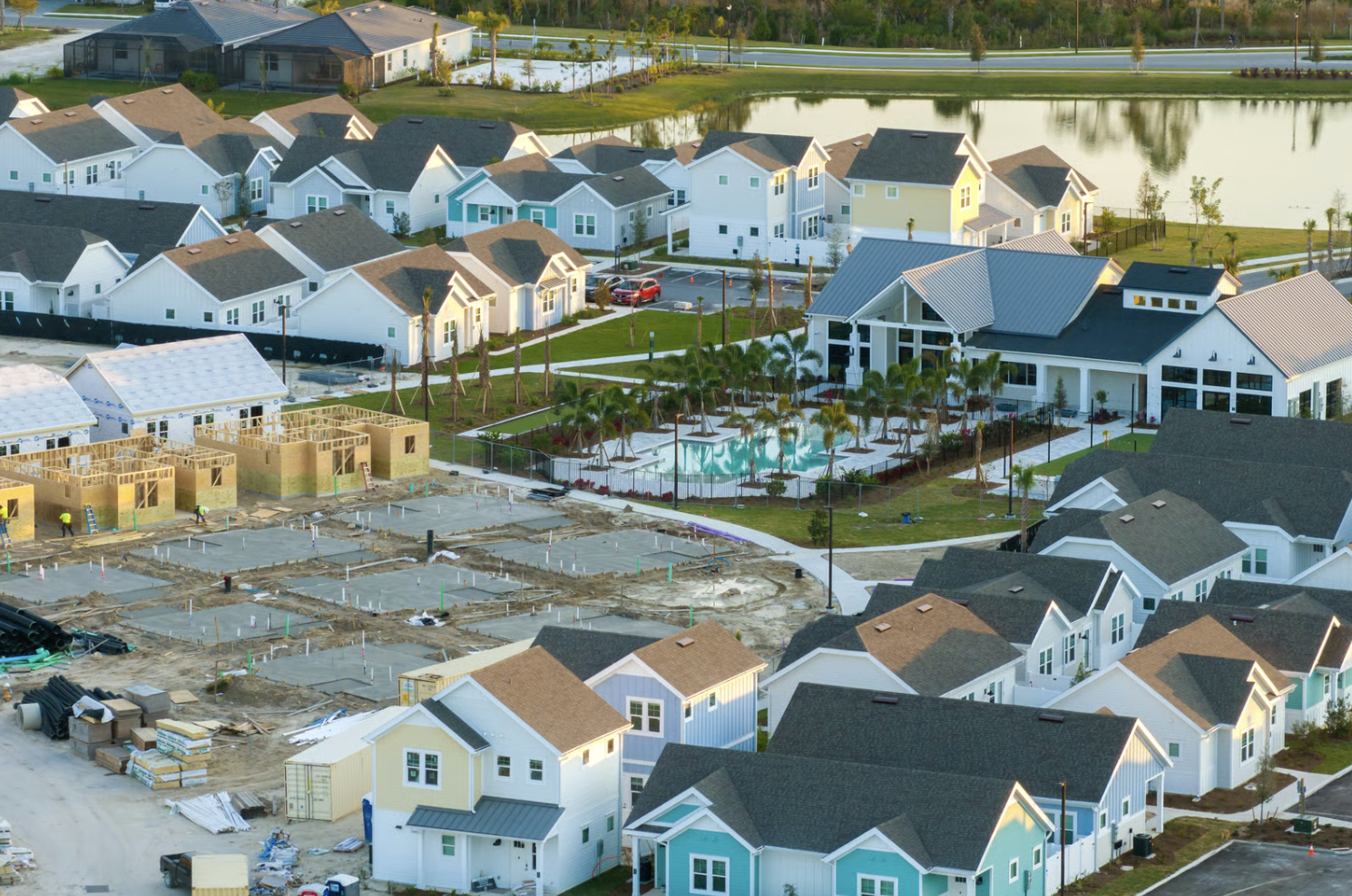
Build-to-rent (BTR) has evolved from a niche strategy into an established segment of the residential rental market. Instead of acquiring scattered existing homes, BTR developers construct purpose-built communities of single-family homes or townhomes designed specifically for renters.
These communities can offer features commonly associated with homeownership—including additional space, private entrances, yards, garages, and neighborhood amenities—without requiring residents to make a down payment or assume the responsibilities of ownership.
For investors and developers, however, BTR is not simply traditional multifamily construction with detached units. Successful projects require disciplined market selection, construction management, lease-up planning, and financing.
BTR construction volume can rise or fall based on interest rates, financing availability, construction costs, land prices, housing supply, and local rental demand.
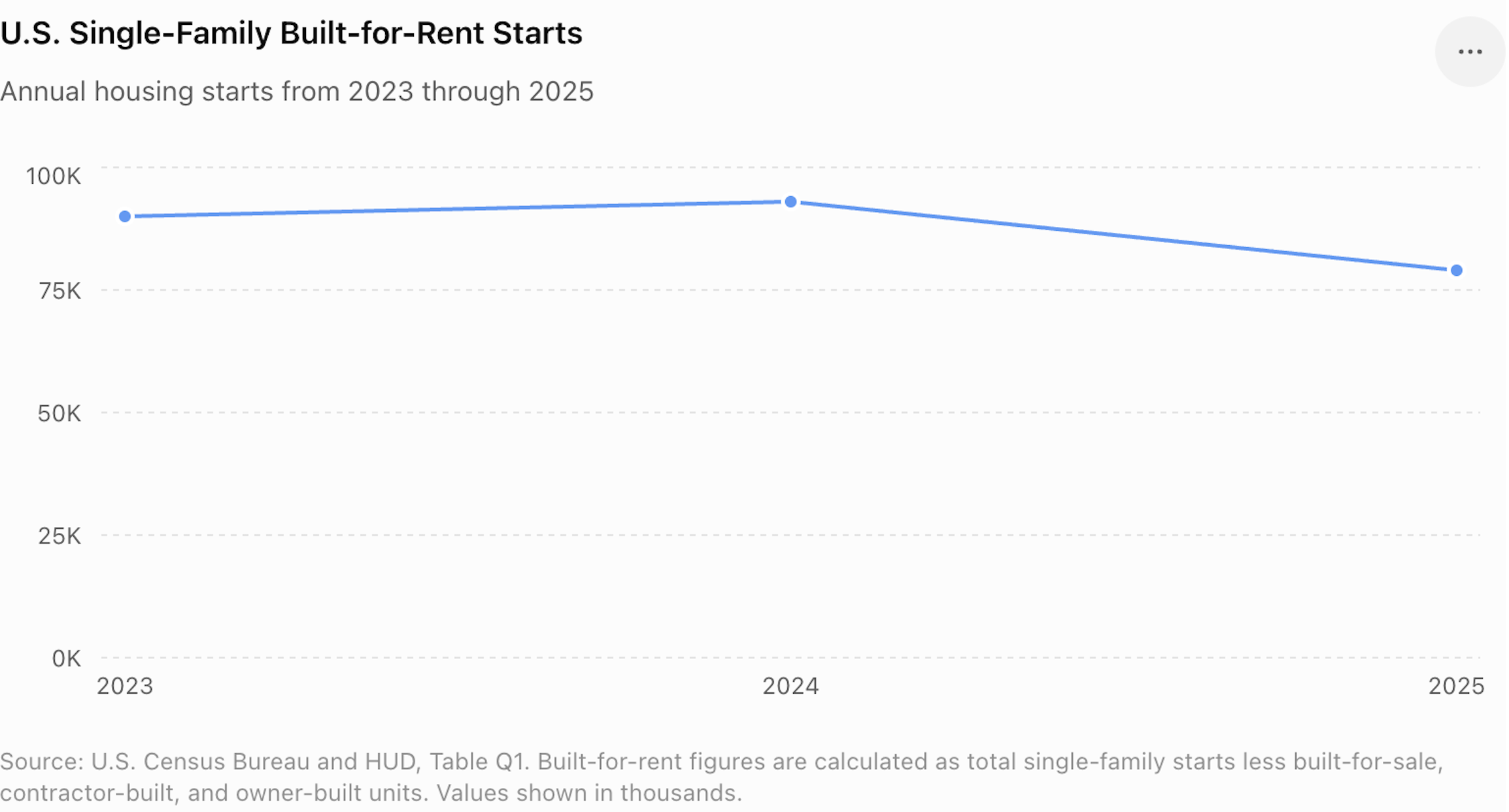
Recent U.S. Census Bureau and HUD data illustrate this movement. Approximately 90,000 single-family homes were started for rent in 2023, followed by 93,000 in 2024 and 79,000 in 2025. These estimates are calculated from the Census Bureau’s annual single-family starts by purpose and design. View the Census and HUD data.
While annual construction volume will continue to change, the underlying BTR model remains relevant. It addresses demand from households seeking the space and privacy of a single-family home with the flexibility of renting.
BTR communities may appeal to households that want more space than a typical apartment provides but are not prepared—or do not wish—to purchase a home.
Potential demand drivers include:
These factors can support demand, but they do not guarantee the performance of an individual development. Investors should evaluate local household growth, rents, competing inventory, employment, and housing affordability before moving forward.
Developers should evaluate household formation, employment trends, renter demographics, competing inventory, achievable rents, concessions, and expected lease-up velocity. A compelling national BTR narrative cannot compensate for insufficient demand in a specific submarket.
Location remains fundamental. Prospective residents may consider proximity to employers, schools, transportation, retail, healthcare, and recreation.
The homes should also be designed for rental operations. Efficient layouts, durable materials, practical storage, standardized components, and manageable landscaping can improve the resident experience while helping control long-term maintenance costs.
A complete project budget should account for more than land and vertical construction. Relevant expenses may include:
Cost overruns or construction delays can affect the project’s yield, financing requirements, stabilization timeline, and exit strategy.
BTR communities require an operating strategy suited to multiple homes spread across a larger site. Investors should establish systems for leasing, rent collection, maintenance, landscaping, resident communication, and amenity management.
Standardizing finishes, appliances, fixtures, and building systems may simplify maintenance, purchasing, and inventory management across the community.
Investors should test the project under multiple scenarios rather than rely only on the most favorable assumptions. Underwriting considerations may include:
A project that remains viable under conservative assumptions may be better positioned to navigate changes in the market.
Before construction begins, sponsors should determine whether the intended strategy is to hold the community, refinance after stabilization, sell the project, or pursue another exit.
The proposed financing, construction schedule, operating plan, and capital structure should support that strategy while preserving flexibility if market conditions change.
BTR financing should reflect the project’s full lifecycle. Construction financing may support development and vertical construction, while permanent financing may become appropriate after the community reaches the occupancy and operating performance required by the lender.
Lenders may evaluate:
Because requirements vary by lender and transaction, sponsors should begin financing discussions early and provide a complete, well-supported business plan.
Build-to-rent has become a meaningful part of the residential housing market. Although construction activity will fluctuate, the strategy continues to serve households seeking single-family living with rental flexibility.
The strongest opportunities are generally supported by demonstrable local demand, a controlled cost basis, practical rental-oriented design, experienced management, conservative underwriting, and a clearly defined exit strategy. Each development should be evaluated on its own economics rather than national housing trends alone.
CoreVest provides build-to-rent financing for qualified residential real estate investors and developers. Contact our team to discuss your site, construction plan, borrowing requirements, and stabilization strategy.
Speak with a CoreVest loan specialist
This article is provided for informational purposes only and does not constitute legal, tax, investment, financial, or lending advice. Market conditions and loan requirements vary by location, lender, program, and transaction. All loans are subject to underwriting, credit approval, eligibility requirements, and applicable terms and conditions.
CoreVest Finance | NMLS #1627183