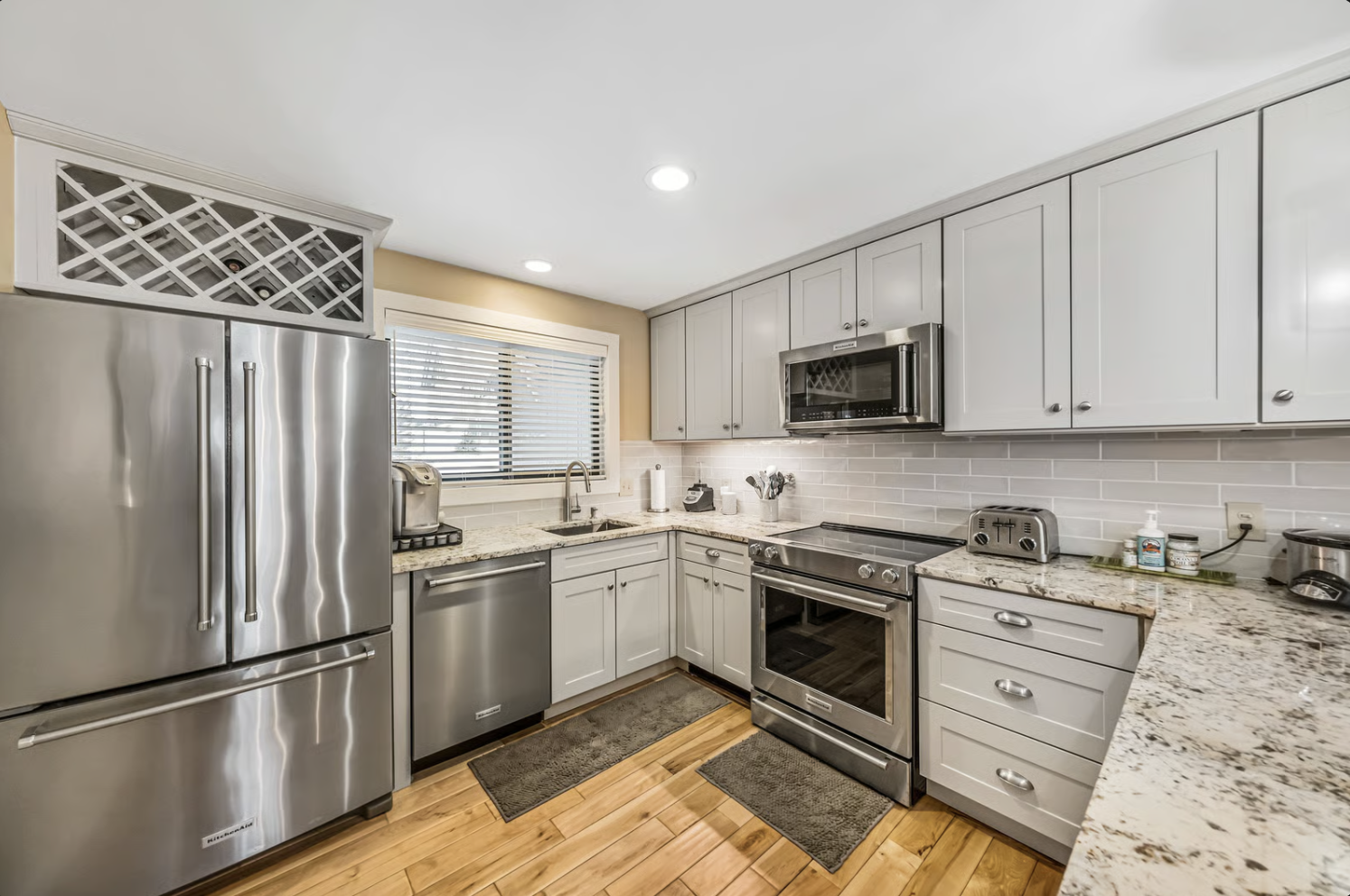
Unexpected appliance and building-system failures can disrupt rental operations, create unplanned expenses, and affect the tenant experience. A home warranty may help cover certain repair or replacement costs, but its value depends on the property, coverage terms, service fees, exclusions, and claims process.
Cinch Home Services is a provider of home warranty plans, which are more accurately described as service contracts. These plans may cover certain appliances and home systems when they experience eligible mechanical breakdowns associated with normal use.
For rental-property owners, a Cinch plan may provide another way to manage maintenance risk. It does not replace property insurance, routine maintenance, capital reserves, or the owner’s legal responsibilities to tenants.
Cinch Home Services offers service contracts covering eligible home appliances and systems. Depending on the selected plan, covered items may include:
Coverage is subject to the specific agreement. Not every component, failure, repair, or associated expense is covered.
Plan availability, pricing, limits, optional coverage, and terms may vary by location and property. Investors should obtain and review the applicable service agreement before enrolling.
No. A home warranty and a property insurance policy serve different purposes.
Property or landlord insurance may cover eligible losses caused by events such as fire, storms, theft, vandalism, or liability claims. Coverage depends on the insurance policy.
A home warranty is a service contract that may help pay to repair or replace specified appliances or systems after a covered mechanical breakdown. It generally does not cover the building against catastrophic property damage.
A home warranty also differs from:
Investors should evaluate each form of protection separately and avoid assuming that one substitutes for another.
The process generally begins when a covered appliance or system experiences a mechanical failure.
Before requesting service, the property owner should confirm that the item and type of failure appear to be covered.
The agreement should explain:
Cinch currently allows customers to submit service requests online or by telephone. Online requests may be submitted through the customer’s account.
Availability to accept a request at any time does not guarantee that a technician will arrive immediately. Appointment timing depends on factors such as location, service-provider availability, the type of repair, parts availability, and the terms of the agreement.
A deductible or service fee is generally due when the request is submitted. Cinch states that the fee applies by service trade.
For example, separate plumbing and electrical issues may require separate fees because they involve different service professionals. The customer may also be responsible for noncovered work or costs exceeding the plan’s limits.
Cinch generally assigns a service provider from its network. The provider contacts the customer or property representative to arrange an appointment and diagnose the problem.
Investors should confirm whether a tenant, property manager, or owner must be present and who is authorized to approve access or additional work.
After diagnosis, Cinch determines whether the failure is covered under the agreement. Depending on the plan and circumstances, the approved resolution may involve a repair, replacement, allowance, or another contractual remedy.
The plan administrator—not the property owner or technician alone—typically determines whether a claim is covered and which remedy applies.
Cinch currently promotes three primary plan categories. Exact coverage and availability may differ by market.
The Repair Only plan is designed to cover eligible repairs to specified appliances and home systems. Cinch currently states that this plan covers repairs involving 37 listed systems and appliances, subject to per-repair and total agreement limits.
Because this plan focuses on repair coverage, investors should review what happens when an item cannot reasonably be repaired.
The Repair + Replace plan adds eligible replacement coverage to the repair benefits for listed appliances and systems.
Cinch currently advertises coverage for major heating, cooling, electrical, plumbing, kitchen, and laundry equipment. Item-specific and aggregate coverage limits apply.
The Repair + Replace Premier plan includes broader benefits. Cinch currently identifies potential coverage for certain outside water, sewer, and gas lines, along with limited assistance for specified costs associated with a covered claim, such as permits or equipment disposal.
Broader coverage does not mean every expense is included. Investors should review the agreement for limits, exclusions, and conditions affecting these additional benefits.
Cinch currently advertises a 180-day workmanship guarantee for covered repairs.
This generally means qualifying repair work is backed for a specified period following the completed service. The guarantee does not necessarily extend coverage to unrelated failures, excluded components, new problems, or repairs performed outside Cinch’s authorized process.
The applicable service agreement should explain how the guarantee works, when it begins, and what a customer must do if the original problem returns.
Cinch does not offer one universal price for every property. Pricing may depend on:
Cinch states that customers may generally choose between monthly and annual payment options. A lower recurring price may be associated with a higher service fee, so investors should evaluate the total potential cost rather than the advertised monthly payment alone.
That evaluation should include:
A personalized quote and current service agreement provide the most reliable information for a specific property.
Yes. Cinch’s current homeowner FAQ states that its direct-to-consumer plans generally have a 30-day waiting period before service can be requested. The customer should be informed of the effective date during enrollment and in the plan documents.
Different terms may apply to plans provided through a real estate transaction, employer, affinity program, or other distribution channel.
Cinch also states that its plans contain total agreement limits and that certain items may have separate per-claim or per-item limits. Once a limit has been reached, the property owner may be responsible for additional costs.
Investors should verify:
A home warranty does not cover every repair. Cinch’s current FAQ notes that nonmechanical building components—such as roofs, windows, walls, and doors—are typically outside standard home warranty coverage.
Other exclusions or limitations may involve:
Some plans may cover portions of these costs or offer optional protection. Coverage should be confirmed through the applicable agreement rather than assumed from a general plan description.
Cinch publishes information specifically addressing home warranties for rental properties, but eligibility and suitability should be confirmed for each property.
Before enrolling a rental, an investor should ask:
An investor should not assume that a standard single-family homeowner plan will cover every rental configuration or property type.
A home warranty may provide value in several ways.
A plan may reduce the investor’s exposure to the full cost of certain covered repairs or replacements. Service fees, exclusions, and limits will still apply.
The provider may coordinate with a service professional, reducing the need for an owner to locate a contractor for every covered issue.
Investors who manage properties from another city or state may find a service-provider network useful. Local availability and response times should be confirmed before relying on the plan.
A home warranty is sometimes offered as part of a real estate transaction. Whether an existing agreement can be transferred—and under what conditions—depends on the contract.
Some plans may cover eligible appliances and systems regardless of age. Age alone, however, does not determine whether a failure is covered. The cause of the breakdown, prior condition, maintenance history, exclusions, and applicable limits may still affect the claim.
A home warranty should not be treated as a complete property-maintenance solution.
A broken item is not automatically a covered item. Eligibility depends on the agreement, cause of failure, condition of the equipment, and claims procedure.
The plan administrator may select the service provider and determine whether an item will be repaired, replaced, or addressed through another contractual remedy.
Investors who prefer to use their own contractors should verify whether outside work is permitted and whether advance authorization is required.
Submitting a request does not guarantee same-day service. Scheduling may depend on the trade, market, weather, demand, and parts availability.
Investors remain responsible for complying with applicable habitability, repair, and tenant-notification requirements, even when a third-party service request is pending.
Service fees, permits, disposal, access, modifications, code compliance, or costs above contractual limits may remain the owner’s responsibility.
Investors should continue maintaining appropriate reserves for repairs, replacements, deductibles, vacancies, and other property expenses.
Before purchasing a plan, investors should compare:
The Federal Trade Commission recommends evaluating the full cost of a service contract, including deductibles and fees, and reviewing limitations, claims procedures, cancellation terms, and the provider’s reputation.
The plans discussed in this article are home warranty service contracts. They are separate from property or landlord insurance and from warranties provided by a builder or product manufacturer.
Cinch generally assigns a provider from its service network. Investors should consult their agreement and obtain authorization before hiring an outside contractor if they expect reimbursement.
Not necessarily. The available remedy depends on the selected plan and its terms. Cinch states that some plans may provide replacement coverage when the company determines that an eligible item cannot be repaired. Coverage caps and other limitations still apply.
Cinch states that customers may submit service requests for covered items as needed until applicable dollar limits are reached. A service fee may apply to each trade involved.
Cinch’s current homeowner FAQ generally identifies a 30-day waiting period for direct-to-consumer plans. The effective date and any exceptions should be confirmed before purchase.
Transfer rights depend on the specific agreement and program. Property owners should request written confirmation of the transfer process, eligibility requirements, and any applicable fee before representing that a plan will transfer to a buyer.
Cinch advertises coverage for certain unknown pre-existing conditions, but that coverage is subject to the applicable agreement. Investors should review how the contract defines an unknown pre-existing condition and what exclusions apply.
Cinch Home Services offers service-contract options that may help property owners manage certain appliance and home-system breakdowns. Its current plan lineup includes repair-only and repair-and-replacement options, with broader benefits available through its highest-tier plan.
For investors, the key question is not simply whether a property has a home warranty. It is whether the specific agreement fits the property, expected maintenance needs, tenant obligations, and operating budget.
Before purchasing a plan, review the coverage limits, exclusions, waiting period, service fees, contractor rules, claims procedures, cancellation terms, and rental-property eligibility. A home warranty may complement a broader risk-management strategy, but it does not replace insurance, preventive maintenance, professional property management, or adequate reserves.
CoreVest provides business-purpose financing for residential real estate investors. Contact our team to discuss financing options for your next rental, renovation, construction, or multifamily investment.
This article is provided for informational purposes only and does not constitute legal, tax, investment, financial, real estate, insurance, warranty, or lending advice. Information about Cinch Home Services is based on publicly available materials and may change. Plan availability, pricing, coverage, exclusions, limits, and service terms vary by location and agreement. Readers should review the current service contract and consult appropriate professionals before purchasing coverage. CoreVest is not affiliated with Cinch Home Services, and reference to a third-party company does not constitute an endorsement. All CoreVest loans are subject to underwriting, credit approval, eligibility requirements, and applicable terms and conditions.
CoreVest Finance | NMLS #1627183