For decades, many neighborhoods offered only two options: Single-family homes or large apartment complexes.
Today, there's growing demand for something in between.
Collectively known as middle housing, these projects create more attainable homeownership and rental opportunities while preserving the character and scale of existing neighborhoods.
By making more efficient use of underutilized land, these developments help address one of today's biggest challenges: increasing housing supply in the communities where people already want to live.
Portland Is Showing What's Possible
Portland has become one of the country's leading examples of how thoughtful zoning reforms and innovative builders are expanding housing opportunities through middle housing, including cottage cluster communities, townhomes, duplexes, and other infill developments.
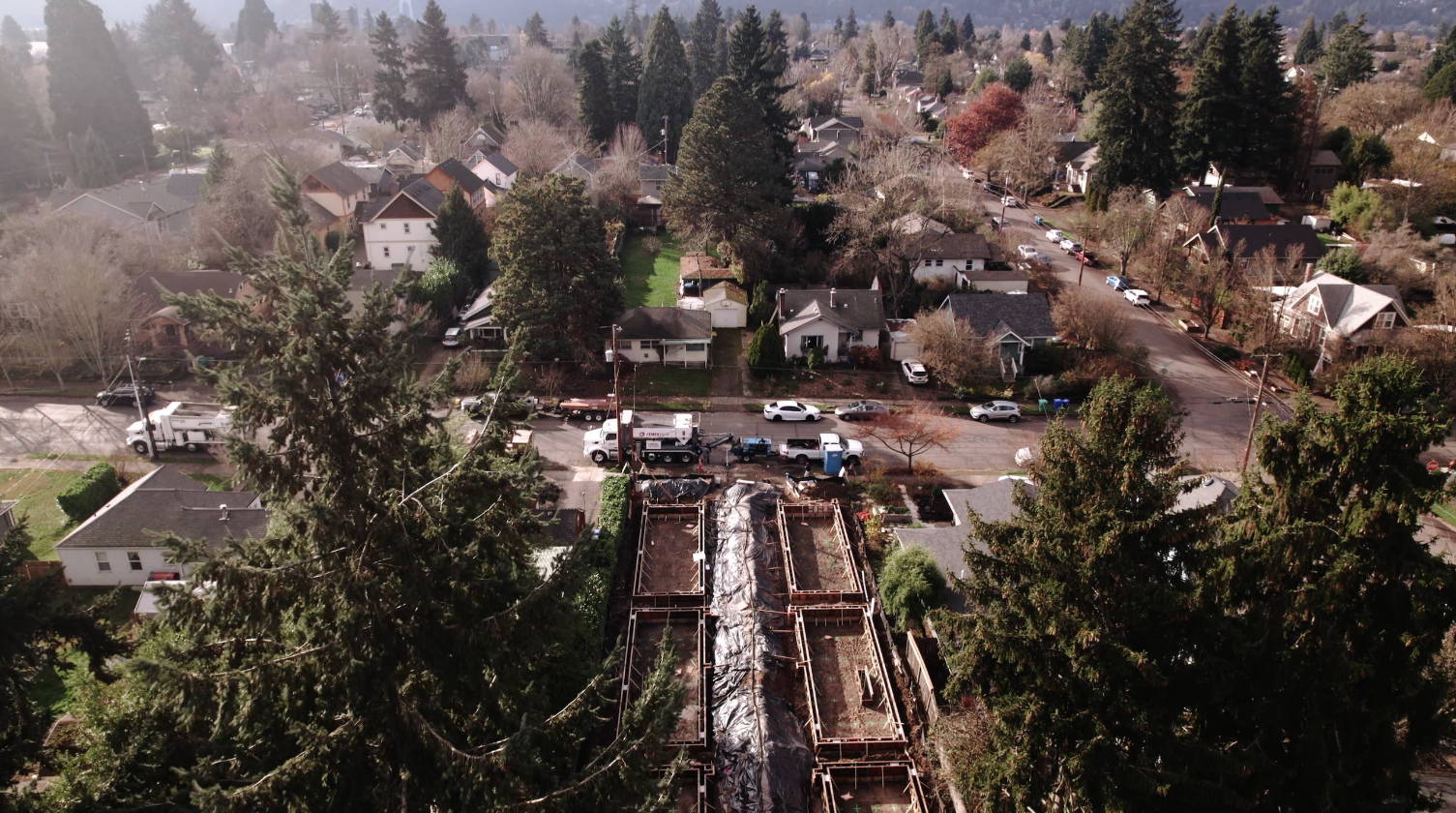
Builders like Aker Development are transforming underutilized parcels into thoughtfully designed neighborhoods that reflect the character of the Pacific Northwest while providing more attainable housing options for today's families.
Cottage clusters, in particular, have emerged as an innovative solution—grouping smaller, energy-efficient homes around shared open spaces to create a stronger sense of community while increasing housing density in a way that feels natural within established neighborhoods.
These aren't large-scale master-planned developments. They're carefully executed infill projects that add meaningful housing one neighborhood at a time.
A Trend Expanding Across the Country
What we're seeing in Portland is part of a much larger movement.
Cities across the United States—including Seattle, Denver, Minneapolis, Austin, Charlotte, Nashville, and communities throughout California—are embracing middle housing strategies such as cottage clusters, townhomes, duplexes, fourplexes, and other infill developments to help address housing shortages without fundamentally changing the fabric of existing neighborhoods.
As municipalities continue updating zoning policies and encouraging higher-density residential development, experienced builders are finding new opportunities to deliver housing that is both attainable and thoughtfully designed.
For lenders, this evolution requires more than simply providing capital. It requires understanding the unique challenges of financing these projects from site planning and entitlement timelines to construction oversight and phased execution.